Devspace

- Published on
- Duration
- Jun 2025 - Present
- Role
- Indie Maker (Solo Developer)
- Website
- devspace.id
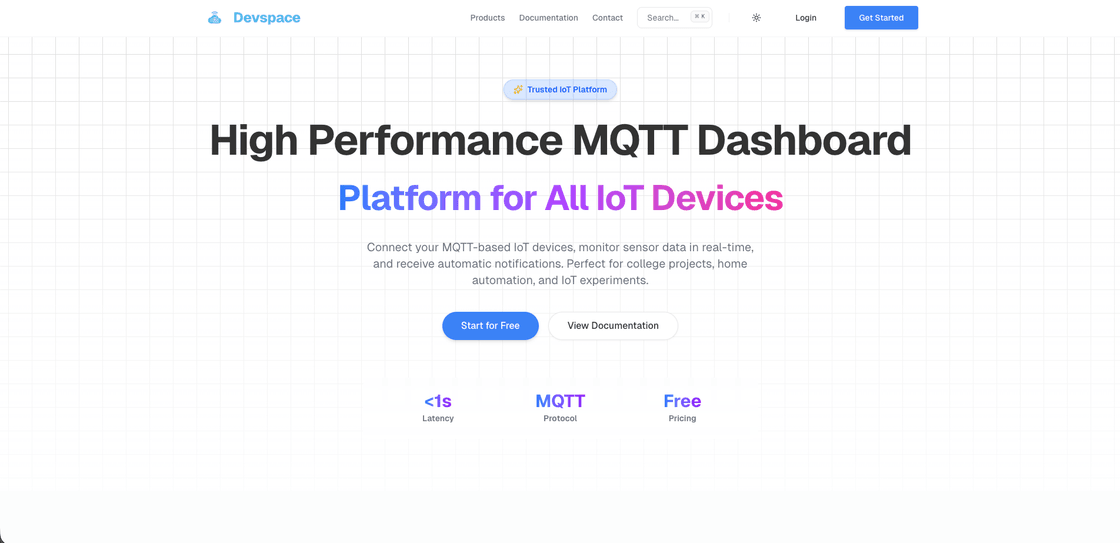
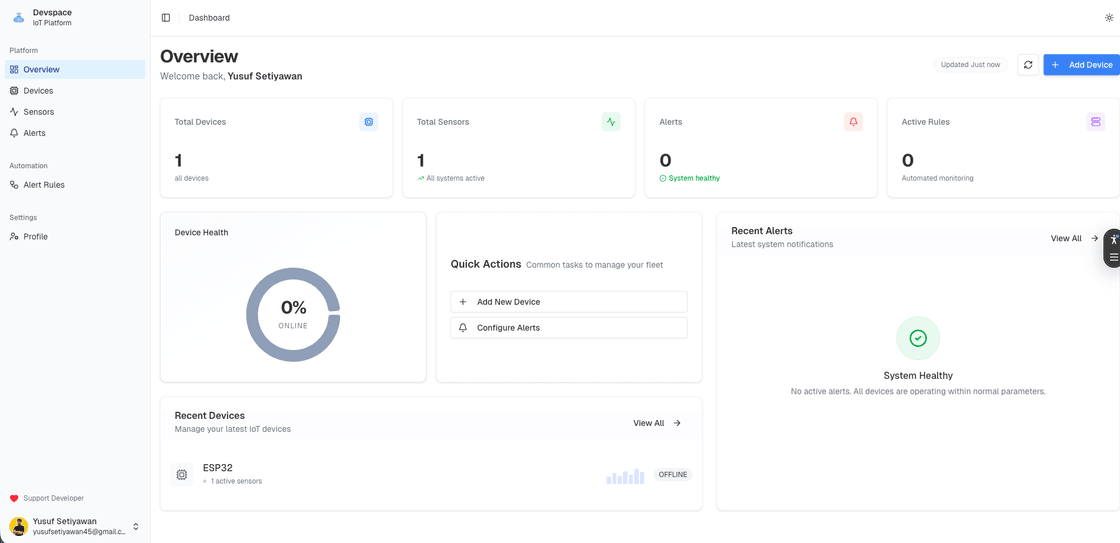
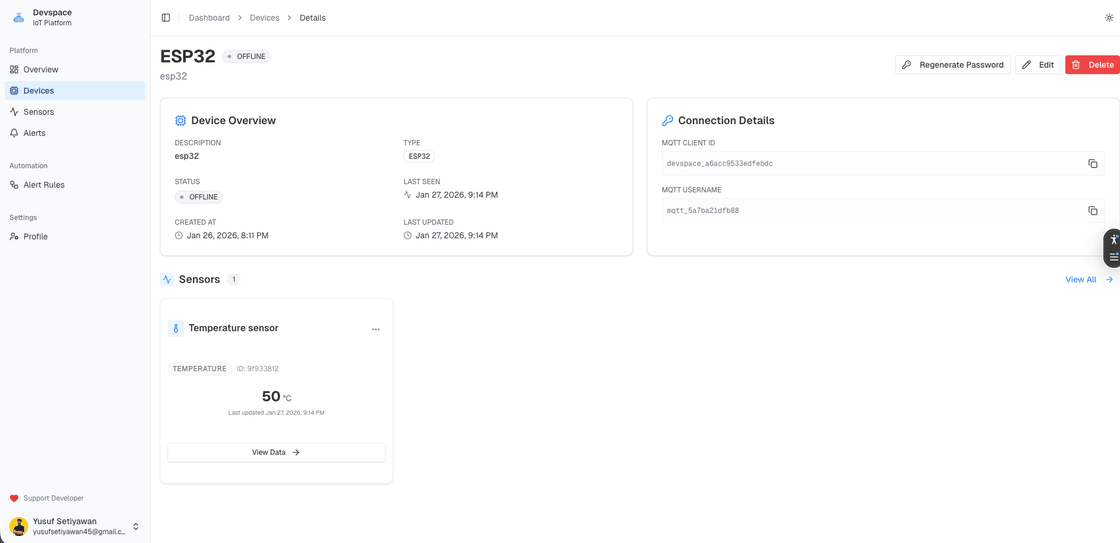
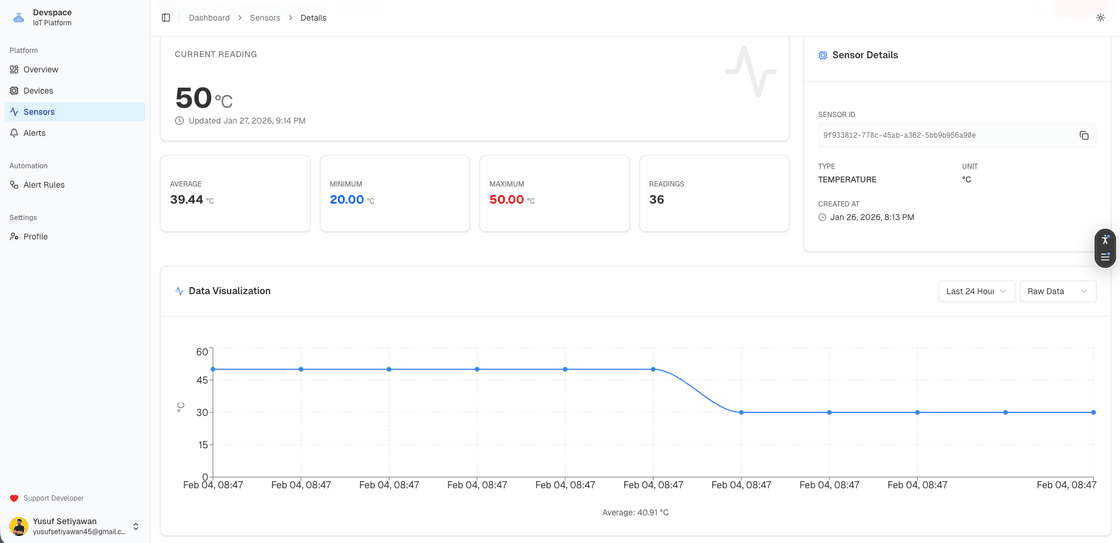
Devspace is a comprehensive IoT platform for connecting devices, collecting MQTT sensor data, and visualizing real-time dashboards. It helps users monitor hardware projects, manage sensors, and create alert rules from one centralized web dashboard.
Tech Stack
Frontend — Built with Next.js App Router, React 19, TypeScript, and Tailwind CSS v4. It uses ShadCN/Radix UI for accessible components across the landing, client, and admin applications.
Backend — Powered by Go (Gin) with PostgreSQL and TimescaleDB for time-series data. It uses Redis for caching and background jobs, with type-safe database access using SQLC.
Infrastructure — Managed as a Turborepo monorepo, using EMQX as the MQTT broker and Docker for local development and deployment.
My Responsibilities
I owned everything end-to-end:
- Product Design — Created the platform flow for landing, client dashboard, and admin dashboard
- Frontend Architecture — Built the responsive dashboard experience with Next.js and reusable UI components
- Backend Development — Developed the Go API for devices, sensors, telemetry, alerts, and authentication
- IoT Integration — Implemented MQTT data ingestion with EMQX and real-time dashboard updates
- Infrastructure — Set up the monorepo, database, Docker environment, and deployment workflow
Key Features
- Real-Time MQTT Integration — Connect IoT devices and stream sensor data through EMQX.
- Device Management — Manage devices, sensors, and configurations from a centralized dashboard.
- Time-Series Visualization — Store and visualize historical sensor data using TimescaleDB.
- Smart Alert System — Configure threshold-based rules for sensor monitoring and notifications.
- Admin Dashboard — Monitor users, devices, alerts, and system activity from an internal dashboard.